195+ Principles to Validate Any Design
195 principles organized by topic and difficulty. Each one includes citations, product examples, and AI prompts ready to paste into Cursor, V0, or Claude.
Good design is not based on instinct. It is based on how people actually process information: what they notice, what they ignore, and why they leave.
These 195 principles cover the patterns behind those decisions. Browse by part, filter by difficulty, or search for a specific problem. Each one links to the research and includes AI prompts you can paste straight into your tool of choice.
Showing 1–12 of 195 principles

Free
Cognitive Load
Working memory holds only 7±2 items. Cutting cognitive load lifts productivity up to 500% and reduces errors through simpler interfaces.
Fixes:Overloaded
Explore principle

Free
Consistency and Standards
Nielsen's consistency heuristic (1990) demonstrates internal and external consistency reduce cognitive load 30-40%, with users operating 40-50% faster (Shneiderman 1987) through predictable patterns enabling automatic responses versus conscious interface relearning for designers.
Fixes:Mystery NavInconsistent
Explore principle
Free
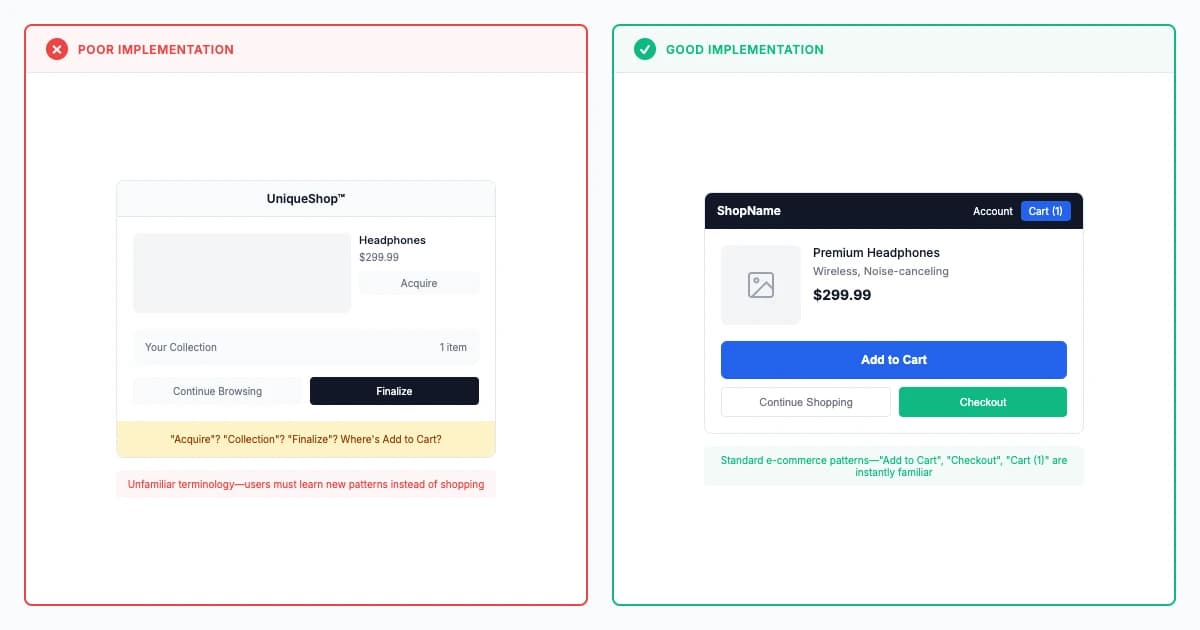
Jakob's Law
Nielsen's Jakob's Law (2000) demonstrates users spend 95-99% time elsewhere creating dominant mental models, with Carroll (1987) showing familiar patterns execute 5-10× faster through positive transfer for designers.
Fixes:Inconsistent
Explore principle
Get Full Access
195 research-backed principles
$59/year
- All principles with citations
- AI prompts for every principle
- Real-world examples
14-day money-back guarantee
Free
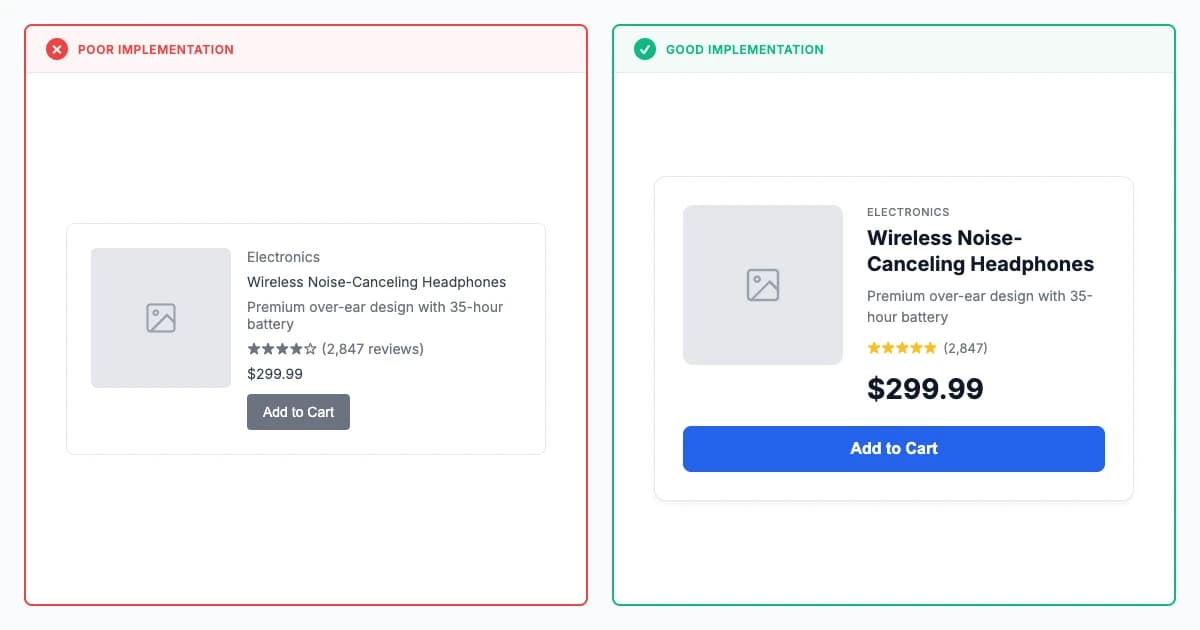
Visual Hierarchy Law
Visual hierarchy (Tufte 1983, Nielsen 2006) demonstrates systematic variation in size, weight, color, and position improves information processing 40-60% and comprehension 25-35% through F-pattern optimization and Gestalt perceptual organization.
Fixes:OverloadedLow Contrast
Explore principle
Free
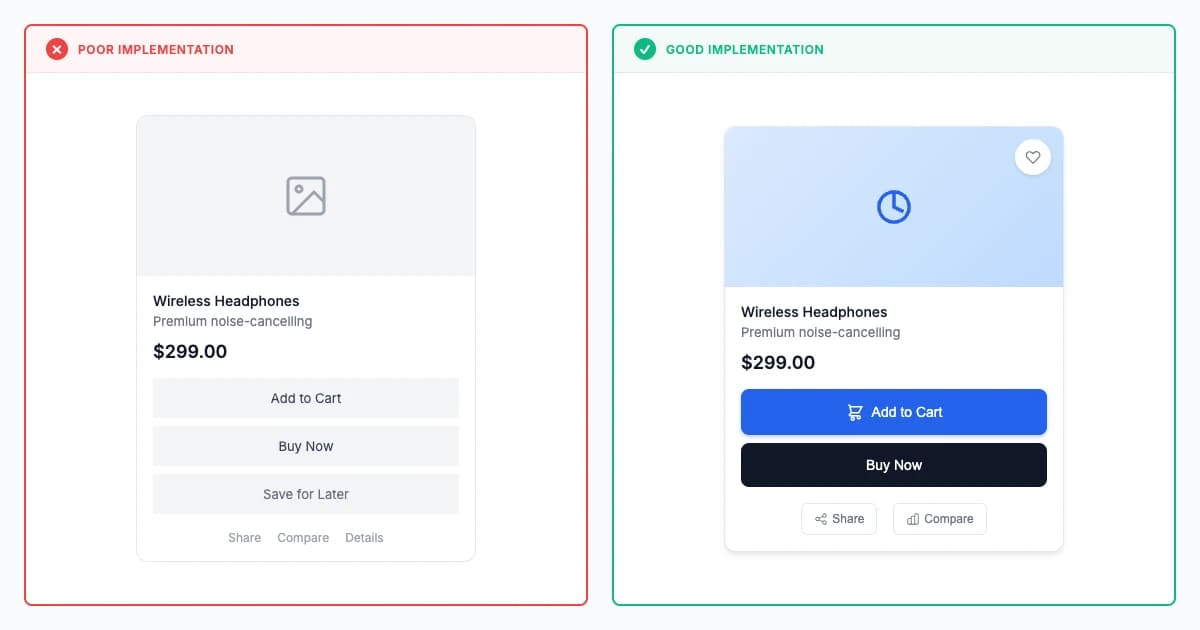
Affordances Law
Affordances make interactive possibilities self-evident through visual and behavioral cues, achieving 40-60% faster initial interaction and 50-70% less instruction by aligning interface appearance with function through buttons, sliders, and links (Norman 1988).
Fixes:Low Contrast
Explore principle
Free
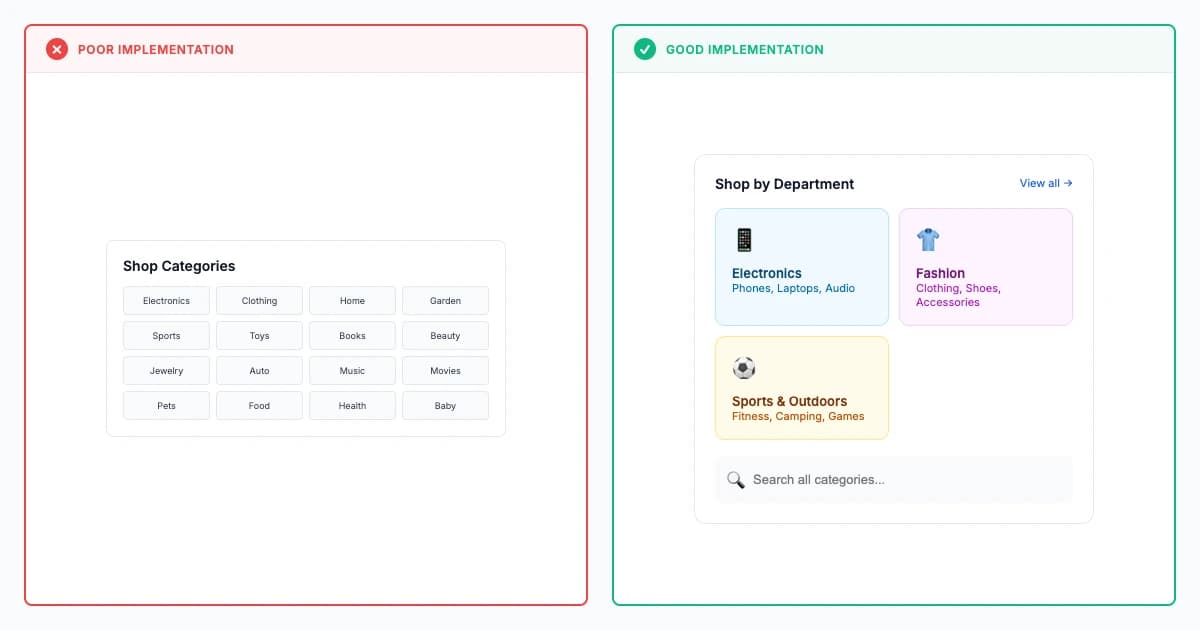
Hick's Law
Hick's Law (1952) demonstrates decision time increases logarithmically T = a + b log₂(n) with choice alternatives, showing 2 choices require 380ms, 4 choices 520ms, 8 choices 680ms, with each doubling adding constant 150-200ms increment through hierarchical brain processing.
Fixes:OverloadedClick Cemetery
Explore principle

Free
Progressive Disclosure
Reveal complexity in stages so users aren't overwhelmed. Progressive disclosure cuts time to first action 30-50% while keeping 70-90% feature discovery.
Fixes:OverloadedForm Graveyard
Explore principle

Free
Fitts's Law
Fitts's Law (Fitts 1954, MacKenzie 1992) demonstrates movement time follows MT = a + b × log₂(2D/W), with larger closer targets reducing interaction time 40-60% and error rates 50-70% through quantifiable motor performance optimization.
Fixes:Form GraveyardClick Cemetery
Explore principle
Free
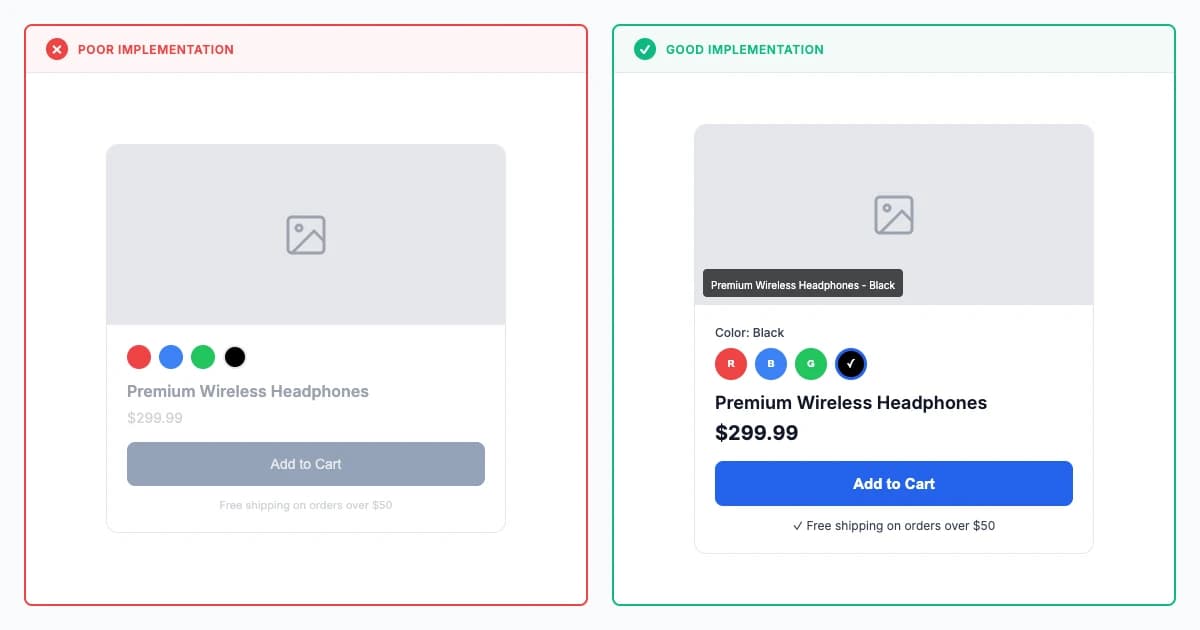
Perceivable Principle (WCAG)
Perceivable principle (WCAG 2.2 2023) requires text alternatives, captions, adaptable content, and 4.5:1 contrast, achieving 60-80% better accessibility for blind users and 50-70% improved usability for low-vision users.
Fixes:Low Contrast
Explore principle

Free
Conversational Flow Principle
Poor conversational design increases clarification requests 3-5x. Apply Grice's maxims to build chatbots and voice UIs that users actually understand.
Fixes:Form GraveyardMystery Nav
Explore principle
Free
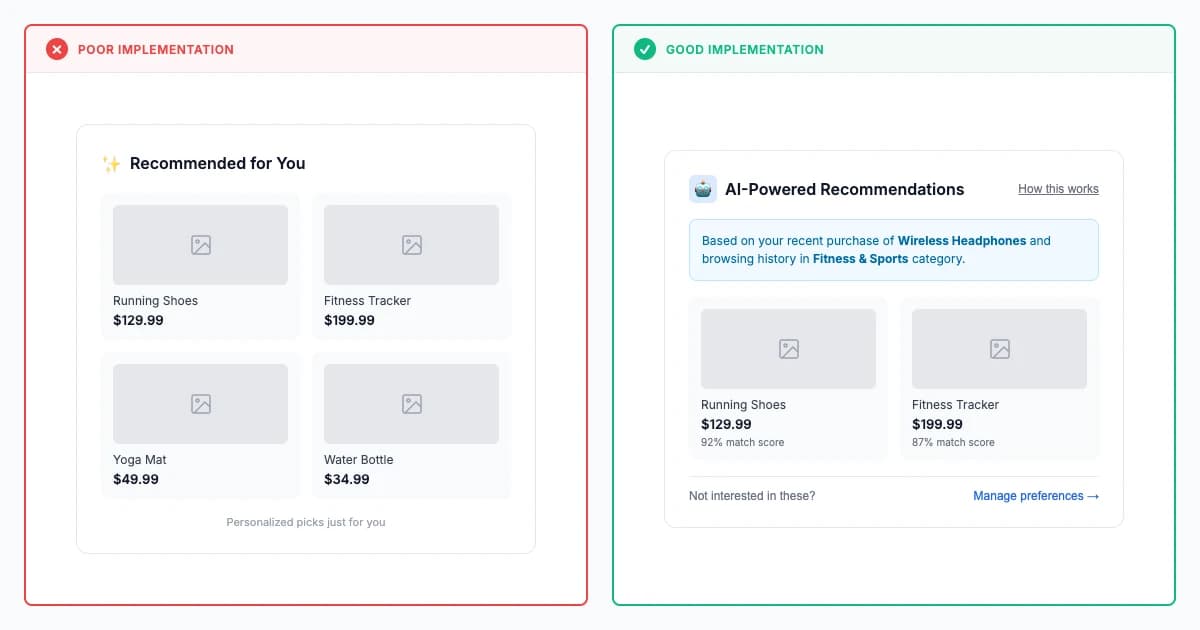
AI Transparency Principle
AI transparency (DARPA XAI 2017, Jobin et al. 2019) requires explainable reasoning and disclosed limitations, with transparent systems improving decision accuracy 40-60% and reducing bias 30-40% through verified reasoning and appropriate trust calibration.
Fixes:Silent ErrorsMystery Nav
Explore principle

Free
Inclusive Wellbeing Principle
Inclusive wellbeing (Holmes 2018, WHO 2020) optimizes for physical, mental, emotional, and social health across diverse populations, proactively designing for stress reduction, social connection, and meaningful engagement beyond task completion.
Fixes:Low Contrast
Explore principle